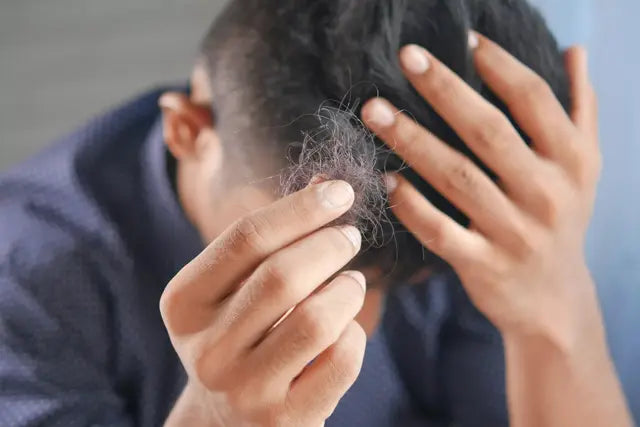
There could be a few different reasons that you’re experiencing balding in your 20s. While progressive baldness is most likely the result of genetics, there are a few unique aspects of our bodies in our 20s that could cause more hair loss than usual.
IS IT BALDING OR SHEDDING?
Through our natural cycles of shedding, we lose an average of 50-100 strands of hair a day. But if you’ve started to notice more hair than usual coming out in the shower or on your pillow, you might be worried that it’s more than regular shedding.4
Hair loss and hair shedding are different processes. Shedding is the process of hair strands leaving the scalp from a healthy follicle that will eventually regrow strands. Hair loss is the result of dead or non-productive hair follicles that will no longer grow hair.4
There are many causes of excessive or long-term shedding, such as:4
Major weight loss
High fever
Recovering from physical trauma, e.g. childbirth or an operation
A hormonal disrupter like birth control.
Any of these can cause a pause in hair regrowth and/or an increase in strands shedding from the scalp, but hair can and will eventually regrow.4
Hair loss is when the hair first falls out and then stops growing all together. This can be the result of genetics, trauma to the follicle from chemicals or extreme hairstyles, or auto-immune responses.4
IS STRESS CAUSING HAIR LOSS?
Your 20s can be a time of increased stress. For many, their 20s are a time of firsts, like entering the workforce for the first time, getting married, living on their own, or having children. As we go through big life changes, we may experience new and more intense periods of stress.5
The type of hair loss that happens as a result of extreme stress is called telogen effluvium. When hair falls out due to this type of hair loss, it’s because of a disruption to our regular shedding cycles. Fluctuations in hormones due to stress can prevent new growth after the shedding period. Usually, telogen effluvium presents as a thinning of hair around the top of the head.5
Those with female hormones tend to experience stress-related hair loss more often those with male hormones. But even though hair may come out in handfuls or clumps, this type of hair loss is not permanent. When the source of the stress is removed, hair growth and shedding cycles get back to normal in about 6 months.5